

Whether you're preparing to sell, remortgage, or simply want to maximise your property's worth, there are cost-effective upgrades you can make that will have a big impact. From budget kitchen upgrades to boosting curb appeal, there are several affordable strategies available. In this guide, we’ll explore 15 cheap ways to add value to your home, including tips on improving energy efficiency, updating key rooms, and even landscaping ideas, all without breaking the bank.
Updated October 2026: we have refreshed this guide with the latest research on what actually moves house prices, current energy grant figures and the permissions that apply to bigger projects. For a wider look at larger projects, see our guide on how to add value to your home, and before you spend, check our list of home improvements that do not add value.
In this blog
- What does the research say about adding value?
- 15 cheap ways to add value to your home
- Where should you start on a small budget?
- FAQs
What Does the Research Say About Adding Value?
Most cheap improvements help your home sell more easily rather than adding a set percentage to its price: they stop buyers knocking money off for work they think needs doing. The clearest price evidence is for adding space, as Nationwide’s research shows:
| Improvement | What the research found | Source |
|---|---|---|
| Loft conversion or extension adding a double bedroom and bathroom | Up to 24% added to the value of a three-bedroom, one-bathroom house (assumes around 28m² of extra space) | Nationwide, 2025 |
| More floor space in general | A 10% increase in floor space adds around 5% to the price of a typical house, all else being equal | Nationwide, 2025 |
| Kitchen and bathroom renovations | The most popular projects, but Nationwide could not identify a measurable value from them | Nationwide, 2025 |
| Better energy rating (owner-occupied homes in England) | A or B rated homes about 1.6% above a similar D rated home; F or G rated homes about 1.4% lower; little difference for C or E | Nationwide, 2026 |
Source: Nationwide House Price Index, Loft it up: attic bedrooms can boost the price of a home by a quarter (price data October 2024 to September 2025) and Energy efficiency ratings have limited impact on owner-occupied house prices (2026).
These are national averages and increases in value, not profit. What any project is worth depends on your street, so a local valuation before you spend is worthwhile.
1. Upgrade Your Kitchen on a Budget
The kitchen is often seen as the heart of the home, and it's one of the first areas potential buyers look at. Luckily, upgrading your kitchen doesn’t have to be costly. By making small but impactful changes, you can add value to your home without a full remodel.
- Replace cabinet doors: Swapping out old or worn cabinet doors for modern, sleek ones can instantly update the space.
- Install a new worktop: A fresh worktop made from materials like laminate or wood can provide a new look for less.
- Energy-efficient taps: Consider installing energy-saving taps that not only reduce water consumption but appeal to eco-conscious buyers.
Keep it in proportion: Nationwide could not find a measurable price uplift from kitchen renovations, so a modest refresh usually makes more sense than an expensive refit just before you sell.

2. Affordable Bathroom Makeovers
Bathrooms are another key area that buyers focus on, but a complete renovation isn’t always necessary to add value to your home. Small, affordable upgrades can make a big difference.
- Update fixtures: Replacing outdated taps, showerheads, and handles with modern fixtures can give your bathroom a fresh, stylish look.
- New tiles or re-grouting: If your bathroom looks tired, adding new tiles or simply re-grouting old ones can instantly revitalise the space.
- Install a heated towel rail: This affordable luxury feature will not only make your bathroom more functional but also more appealing to potential buyers.
3. Energy Efficiency Improvements
With rising energy costs and increased environmental awareness, improving the energy efficiency of your home is a practical way to add value. These upgrades are not only cost-effective but can also save potential buyers money in the long run, making your home more attractive.
- Insulation: Adding or upgrading loft and wall insulation can reduce heating bills, making your home more energy-efficient.
- Energy-efficient windows: Double or triple-glazed windows are a must for homes in the UK, providing better insulation and lowering energy costs. Replacing windows and doors can need building regulations approval, so use an installer registered with a competent person scheme and keep the certificate for when you sell.
- Smart thermostats: Installing a smart thermostat, like a Hive or Nest, allows homeowners to control heating remotely, offering convenience and potential savings.
The price premium for a better Energy Performance Certificate (EPC) rating is modest (see the table above), but 77% of people Nationwide surveyed in 2026 said EPC rating would be an important factor when choosing a home to buy in future. Our guide to why a good EPC rating is a selling point explains more.
Grants and help available (checked October 2026):
- Boiler Upgrade Scheme (England and Wales): £7,500 towards an air source or ground source heat pump, £5,000 towards a biomass boiler or £2,500 towards an air-to-air heat pump. Until March 2027, homes heated by oil or LPG with no mains gas connection can get an extra £1,500 towards an air or ground source heat pump. Hybrid systems do not qualify. See what you can get on GOV.UK, and our guide to heat pumps if you are weighing one up.
- Great British Insulation Scheme: GOV.UK says this scheme ended on 31 March 2026 and its eligibility checker has closed, although some energy suppliers are still accepting applications, so it is worth asking yours.
- Free advice: GOV.UK’s Find ways to save energy in your home service suggests improvements for your property with estimated costs and savings.
4. Boost Your Curb Appeal
First impressions matter, and your home's exterior can significantly influence its perceived value. Luckily, boosting your curb appeal can be done without a hefty price tag. A few affordable tweaks can make your property stand out and appeal to potential buyers.
- Paint the front door: A fresh coat of paint in a bold but tasteful colour, like navy or red, can make your entrance more inviting.
- Enhance outdoor lighting: Add solar-powered lights along your garden path or porch to create a welcoming atmosphere at night.
- Landscape the front garden: Simple updates such as trimming hedges, planting seasonal flowers, or adding mulch can give your home a fresh, tidy appearance.
Many buyers will see your home online before they visit, and the front of the house is often the main listing photo, so it is worth getting right before the photographer arrives.

5. Transform Your Garden into a Selling Point
Outdoor space is highly desirable in the UK property market, and a well-maintained garden can significantly add value to your home. Even on a budget, you can turn your garden into a feature that buyers will love.
- Create a patio area: A simple, affordable patio using paving stones or decking provides a space for outdoor dining and relaxation.
- Add outdoor lighting: String lights or solar-powered garden lights can enhance the ambience of your garden, making it a more attractive space during the evenings.
- Tidy up the garden: Mow the lawn, trim overgrown plants, and remove weeds. A neat, low-maintenance garden will appeal to buyers who want a pleasant outdoor space without the hassle.
6. DIY Painting Projects
A fresh coat of paint is one of the most affordable ways to add value to your home. By choosing neutral, timeless colours, you can give your home a clean and modern feel that appeals to a broad range of buyers.
- Neutral colours: Opt for shades like white, light grey, or soft pastels to create a bright and welcoming atmosphere. Neutral tones also make it easier for potential buyers to imagine themselves in the space.
- Feature walls: If you want to add some character, consider a subtle feature wall with a bolder colour in the living room or bedroom.
- Refresh skirting boards and doors: Don't forget to give your skirting boards and internal doors a fresh coat of paint to complete the look.
7. Declutter and Create More Space
One of the easiest and cheapest ways to add value to your home is by decluttering. By removing unnecessary items, you can make your home feel larger and more organised, which is highly appealing to potential buyers.
- Declutter rooms: Clear out excess furniture, clothes, and personal items. A minimalist approach can make rooms appear more spacious.
- Built-in storage solutions: Consider adding built-in wardrobes or shelving to maximise space and functionality, especially in smaller rooms or flats.
- Open up spaces: Rearrange furniture to create a more open flow between rooms. This simple trick can make a big difference, particularly in compact spaces like city flats.
8. Replace Old Flooring
Worn-out flooring can make a home feel dated, but replacing it is an affordable way to instantly refresh your interior and add value. There are several budget-friendly options that can provide a modern and durable finish.
- Laminate flooring: A cost-effective alternative to hardwood, laminate is easy to install and available in a wide range of finishes.
- Vinyl flooring: Another affordable option, vinyl can mimic more expensive materials like wood or tile, providing a stylish look without the high cost.
- New carpets: Replacing old, worn carpets with fresh, neutral-coloured ones can make your home feel clean and cosy, especially in bedrooms and living areas.
9. Install Smart Home Technology
Adding modern features like smart home technology is an excellent way to appeal to tech-savvy buyers and add value to your home. Smart upgrades are relatively inexpensive but can significantly enhance your property’s functionality and attractiveness.
- Smart thermostats: Devices like Hive or Nest allow homeowners to control heating remotely, increasing energy efficiency and convenience.
- Smart lighting: Installing smart bulbs or switches enables you to control lighting through apps or voice commands, creating a more modern and customisable living space.
- Security systems: Affordable smart home security options, such as video doorbells or smart locks, can provide an extra layer of safety, which is a key selling point for many buyers.
10. Fix Superficial Defects
While they may seem minor, superficial defects can leave a negative impression on potential buyers. Addressing these small but noticeable issues can make your home look well-maintained and add value without significant cost.
- Repair cracks: Fill in any visible cracks in walls or ceilings, as these can make a property seem neglected.
- Replace broken tiles: Damaged tiles in the kitchen or bathroom can be unsightly and reduce the overall appeal, so it’s worth replacing them.
- Fix leaky taps: Dripping taps not only waste water but can also give the impression of poor maintenance. Replace washers or taps to resolve this.
Cosmetic fixes should not hide genuine problems. A buyer’s surveyor will look for damp, movement and defects, and anything they find can become a reason to renegotiate. Our guide to the difference between a Level 2 and Level 3 survey explains what surveyors check.
11. Budget-Friendly Loft Conversions
A loft conversion is not a cheap project, but it is often the most cost-effective way to add a room to your house. It’s a great alternative to a full extension and can significantly increase your property’s value: Nationwide found a loft conversion or extension adding a double bedroom and bathroom can add up to 24% to a three-bedroom, one-bathroom house.
- Minimal structural changes: To keep costs down, opt for a loft conversion that doesn’t require major structural changes. Velux-style roof windows, for example, can be installed without altering the shape of the roof.
- DIY options: If you’re handy, consider handling some aspects of the project yourself, such as decorating, to save on labour costs. Structural work, stairs, fire safety and insulation all need to meet building regulations, so leave those to professionals.
- Use the space wisely: Whether it’s a guest bedroom, a home office, or storage, make sure the loft is designed to maximise the available space efficiently.
Permissions to check first:
- Building regulations: the Planning Portal confirms approval is required to turn a loft into liveable space, and buyers’ solicitors will ask for the certificate.
- Planning permission: many loft conversions on houses in England are permitted development, within limits such as 40 cubic metres of extra roof space for terraced houses and 50 for other houses. These rights do not apply to flats, or to homes in conservation areas or National Landscapes (formerly areas of outstanding natural beauty), according to the Planning Portal. The North Wessex Downs National Landscape covers parts of Berkshire, Oxfordshire and Wiltshire, so if you live in or near it, check with your council first.
- Party walls: in a terraced or semi-detached house, work to a shared wall may mean following the party wall process. See our guide to what a party wall agreement is.

12. Maximise Storage
In many homes, particularly flats, storage space is a top priority for buyers. Maximising storage is an affordable way to add value and make your home more practical and attractive.
- Built-in wardrobes: Installing built-in wardrobes in bedrooms provides ample storage while freeing up floor space.
- Floating shelves: These are a stylish and functional addition to living rooms, kitchens, and bedrooms, offering storage without taking up valuable floor space.
- Under-stair storage: Make use of the often-wasted space under the stairs by adding drawers, cupboards, or even a small desk nook.
13. Invest in Low-Cost Landscaping
A well-designed garden can be a huge selling point, and you don’t need to spend a fortune to create an inviting outdoor space. Low-cost landscaping improvements can help you make the most of your garden, enhancing both its usability and appearance.
- Fresh turf: Laying down fresh grass or repairing patchy areas can instantly improve the look of your garden.
- Garden borders: Simple garden borders made of wood, stone, or even inexpensive plastic edging can give your flower beds a neat, structured appearance.
- Small seating area: Create a budget-friendly seating area with gravel or paving stones, and add some affordable outdoor furniture to encourage outdoor living.
14. Upgrade Your Lighting
Lighting plays a crucial role in how your home feels. Modernising your lighting fixtures is an affordable way to add value to your home and enhance its appeal.
- Replace old fixtures: Swap outdated lighting fixtures with contemporary designs, such as pendant lights or recessed lighting, to give your home a more modern look.
- LED lighting: Upgrade to energy-efficient LED bulbs, which not only save on electricity bills but also provide brighter and cleaner light.
- Layered lighting: Consider adding layers of light, such as ambient, task, and accent lighting, to create depth and warmth in key rooms like the kitchen and living room.
Swapping a light fitting like for like is usually straightforward, but replacing a fuse box or changing electrics near a bath or shower can need building regulations approval, so use a registered electrician and keep the certificate.

15. Seek Expert Advice on Prioritising Projects
If you're unsure where to start or which improvements will give you the best return on investment, it’s worth seeking advice from a property expert. An expert can assess your home’s current condition and guide you on which areas will offer the most value.
- Consult a property surveyor: A surveyor can help identify structural improvements that will increase your home’s value.
- Speak to us at Jones Robinson: We have valuable insight into what buyers are looking for in your area, helping you focus on the most impactful projects. Ask us what your home would be worth with and without the work you are planning.
- Home improvement consultations: Many contractors offer consultations to help you plan renovations that fit your budget and goals.
- Check local sold prices: If your planned spend would push your home well above what similar homes nearby have sold for, you are unlikely to get it all back.
Where Should You Start on a Small Budget?
If you are selling soon, work from the cheapest, quickest jobs upwards. Larger projects such as a loft conversion only make sense if you plan to stay long enough to enjoy them, or if a local agent confirms the extra bedroom would be worth more than the build cost.
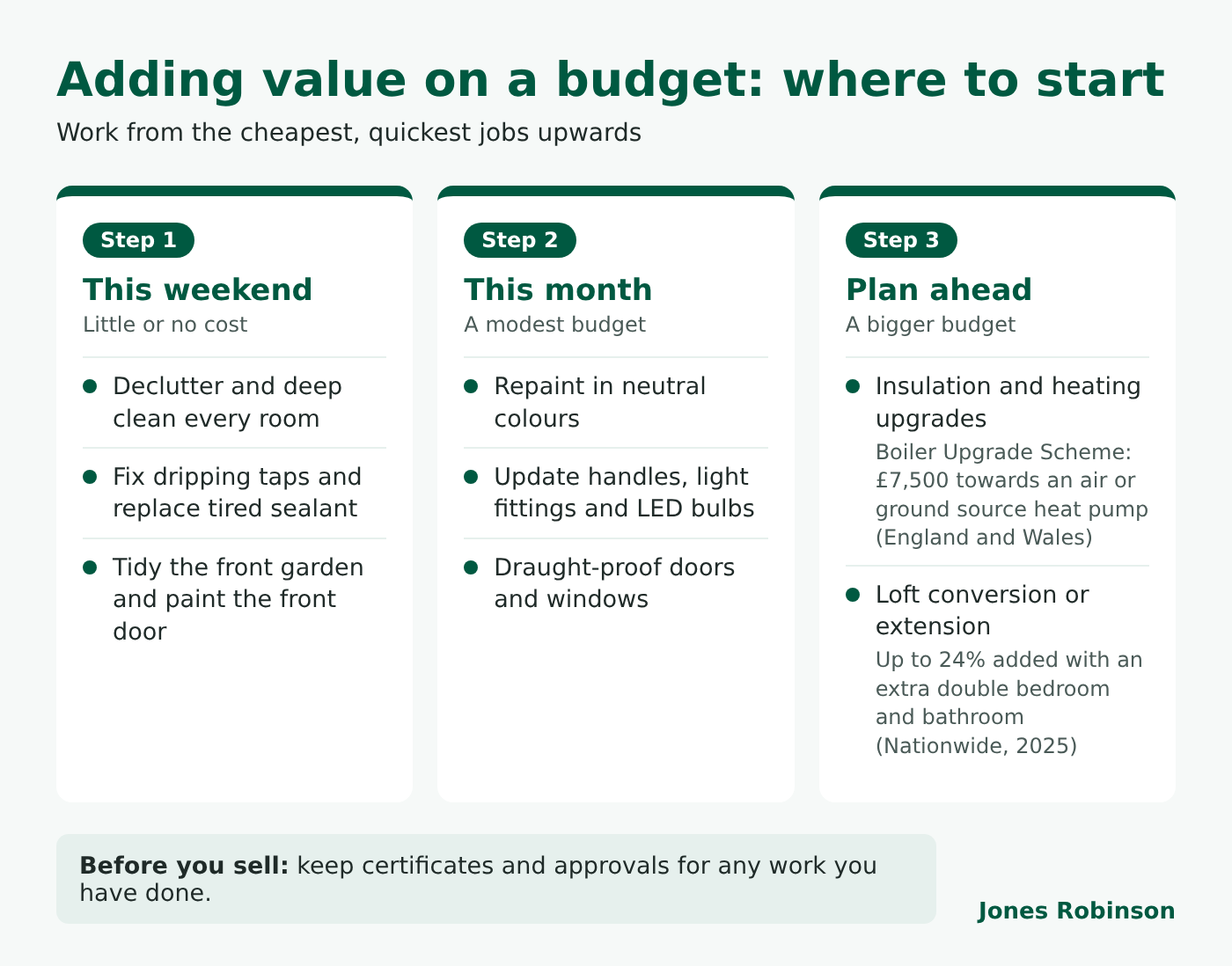
Keep receipts, guarantees and certificates together, as your buyer’s solicitor will ask for them. Our guide on how to prepare to sell your house covers the practical steps before you go on the market.
FAQs
What is the cheapest way to add value to your home?
Decluttering, cleaning, fixing small defects and repainting in neutral colours cost the least. They rarely add a fixed percentage, but they reduce the reasons buyers give for offering less.
Does a new kitchen or bathroom add value?
It can help a home sell, but Nationwide’s 2025 research could not identify a measurable value from kitchen and bathroom renovations. A neutral refresh is usually a safer bet than a full refit before selling.
Do energy efficiency improvements increase house prices?
Only modestly. Nationwide’s 2026 research found owner-occupied A or B rated homes in England were valued about 1.6% above a similar D rated home. The main benefits are lower bills and buyer interest.
Do I need planning permission for a loft conversion?
Often not for a house in England, as many loft conversions are permitted development within set size limits. You will normally need planning permission for a flat, or if your home is in a conservation area or a National Landscape. Building regulations approval is always required to turn a loft into liveable space.
Conclusion
Adding value to your home doesn’t have to involve expensive renovations. From budget-friendly kitchen upgrades to simple landscaping improvements, there are plenty of cheap ways to add value to your home. By focusing on key areas like energy efficiency, storage solutions, and curb appeal, you can make your property more attractive to potential buyers while keeping costs down.
Remember, small changes can make a big difference, and with careful planning, you can increase your home's value without breaking the bank. Whether you’re looking to sell soon or simply want to enhance your living space, these affordable improvements will set you on the right path.
At Jones Robinson estate agents, we’re here to help you every step of the way. Whether you live in Newbury, Didcot, Marlborough, Pewsey, Devizes, Lambourn or the villages around them, we can tell you which improvements buyers in your area value. Book a free valuation or contact your local branch for expert advice if you’re looking to sell or let your property:
Devizes: 01380 730200
Didcot: 01235 816222
Lambourn & Hungerford: 01488 73337
Marlborough: 01672 556640
Newbury: 01635 35010
Pewsey: 01672 556640