
If you are selling your home, or even considering doing so in the future, one of the first things you want to do is make your sale as profitable as possible. As with any investment, the goal is to make a profit from your purchase, and your home is no different. But, how do you do this?
We have been advising clients on how to maximise the value of their property for over 20 years, and in that time we have picked up a number of tips that will add a few more pounds to your property sale.
Updated October 2026: we have refreshed this guide with Nationwide’s latest research on what adds value, corrected figures that were out of date and added the permissions that bigger projects need. This guide now focuses on larger projects such as extensions, loft conversions and kitchens. If you are working to a small budget, see our cheap ways to add value to your home, and before you commit, read our list of home improvements that do not add value.
In this blog
- Which bigger projects add the most value?
- How to increase the value of your home
- What permissions do bigger projects need?
- FAQs
Which bigger projects add the most value?
Nationwide’s research points to one clear message: extra usable space, and especially extra bedrooms and bathrooms, is what moves prices most. Its analysis of sale prices from October 2024 to September 2025 found:
| Project | Typical effect on value |
|---|---|
| Loft conversion or extension adding a double bedroom and bathroom (three-bedroom, one-bathroom house) | Up to 24% (assumes around 28m² of extra space) |
| Extra bedroom, two beds to three | 13% terraced, 14% semi-detached, 17% detached |
| Extra bedroom, three beds to four | 10% terraced, 10% semi-detached, 13% detached |
| 10% more floor space in general | Around 5%, all else being equal |
| Kitchen and bathroom renovations | No measurable value identified, although 71% of homeowners who renovated in the last five years had done one |
Source: Nationwide House Price Index, Loft it up: attic bedrooms can boost the price of a home by a quarter (2025). Bedroom figures assume a usable bedroom of around 13m².
These are national averages and increases in value, not profit. Every street also has a ceiling price, so if your plans would push your home well above what similar homes nearby have sold for, you are unlikely to get it all back. Check local sold prices on HM Land Registry’s sold price search, or ask us for a valuation before you start.
How to increase the value of your home
Upgrade and modernise your kitchen

If your kitchen is looking a bit tired and dated, it is natural to think about replacing it, and buyers do pay close attention to the kitchen. Be realistic about the return, though. Nationwide could not identify a measurable value from kitchen and bathroom renovations, so a new kitchen is best seen as something that helps your home sell and that you will enjoy, rather than a guaranteed profit.
A kitchen project is more likely to pay when it adds space, for example extending to create a kitchen-diner. If you are selling soon and the kitchen is sound, a refresh (new doors, worktops or handles, a deep clean and good lighting) is usually the better bet.
Loft conversion for maximum value increase
If you have a large loft which is being used as a junk room or storage space, you have the potential to add a lot of value to your home.
By adding a bedroom and bathroom as a loft conversion, you could be increasing your house value by up to 24%: that is Nationwide’s 2025 estimate for a three-bedroom, one-bathroom house gaining a large double bedroom and bathroom. These conversions are not cheap, so weigh the build cost against what a local agent thinks the finished house would sell for.
The new room only adds full value if it is genuinely usable, with enough head height and a fixed staircase. Building regulations approval is always needed to turn a loft into a habitable room, and your buyer’s solicitor will ask for the completion certificate.
If your house is old, make sure you modernise the plumbing and wiring. This will not only increase the value of the property but will also ensure there are no faults in either system. Some faults may not be apparent until a property survey. Therefore, it is better to get it done before you put it up for sale. Replacing a fuse box, changing electrics near a bath or shower and installing or replacing a heating system can all need building regulations approval, so use installers registered with a competent person scheme and keep their certificates.
Extend your home
Nationwide’s 24% figure applies to an extension as well as a loft conversion, as long as it adds a double bedroom and bathroom. A single-storey rear extension that creates a kitchen-diner or family room adds floor space rather than bedrooms, so the uplift is usually smaller, but the extra space is still the part buyers pay for.
Many extensions to houses in England are permitted development, so need no planning application, within set limits: a single-storey rear extension can usually project 3m from the original rear wall (4m for a detached house), or 6m (8m detached) with prior approval from the council. Building regulations approval generally still applies, as our permissions summary explains. If you share a wall with a neighbour, read our guide to what a party wall agreement is.
Consider fitting a conservatory/sunroom
If you have the space to do so, installing a conservatory or a sunroom is a great way to add space to your property.
Even if you aren’t intending on selling straight away it is a great addition to any house, as it gives you that extra bit of space. It becomes a room where you can truly enjoy the sun, without physically having to sit outside. Perfect for those cold, sunny, winter mornings.
How much value it adds depends on how usable it is: a conservatory that is too hot in summer and too cold in winter counts for less than a room buyers can use all year. Conservatories follow the same planning rules as extensions and are often exempt from building regulations, although any new opening into the house needs approval.
Fix any structural issues
This can potentially be one of the pricier improvements to your house to increase its value, however it is also one of the most important.
A buyer’s mortgage lender will usually arrange a valuation, and many buyers also commission their own survey. So, any potential structural issues are likely to be picked up then, which could mean either a large reduction in your house price or an expensive repair bill.
To stop this from happening arrange for your own survey to be carried out to check for any structural faults. Our guide to the difference between a Level 2 and Level 3 survey explains which is right for an older home, and our guide to subsidence cracks covers which cracks are worth worrying about.
Create an open-plan room/s
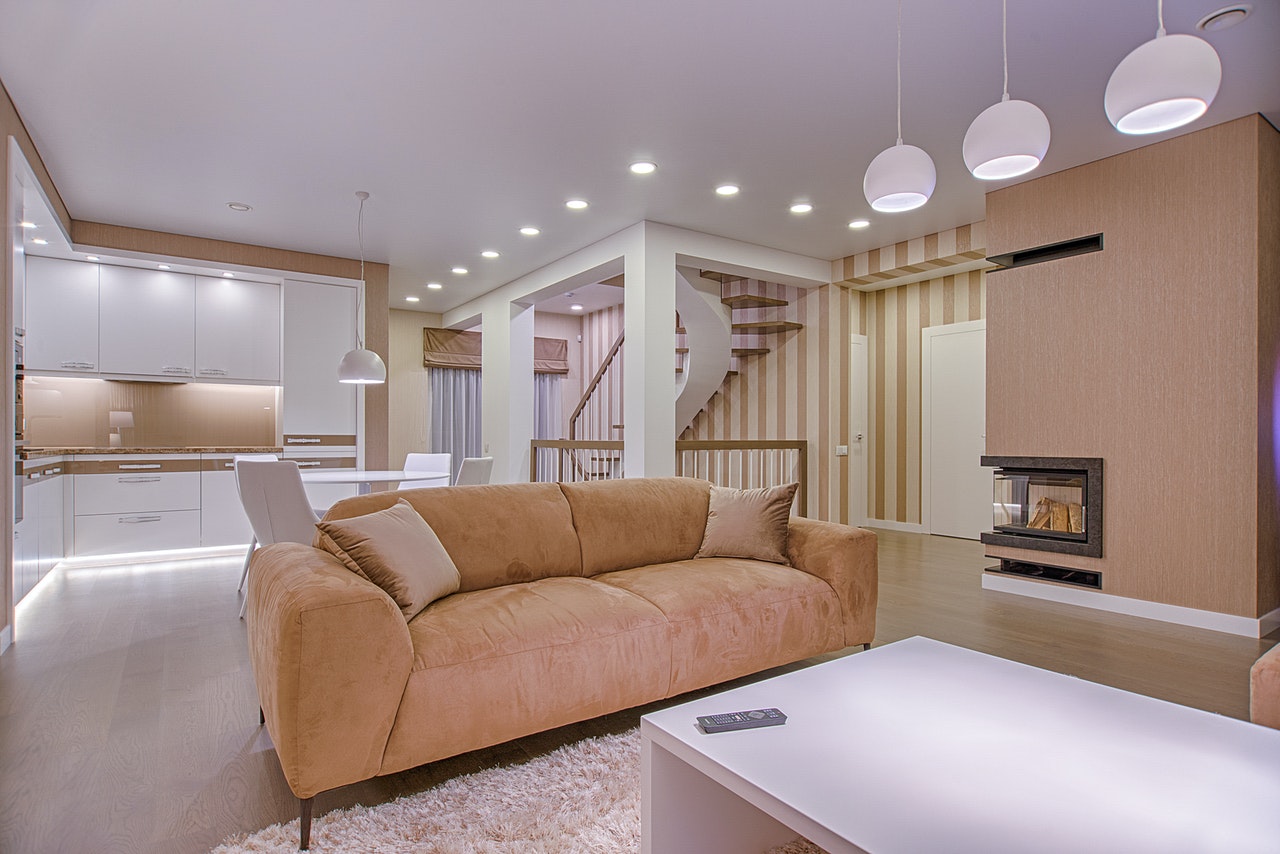
A big draw for potential buyers is space. The airier and bigger the space, the more your property could be worth.
Knocking through to make your kitchen, dining room and lounge open plan can transform how a house feels. You should not need planning permission for internal walls (unless the house is listed), but building regulations will normally apply to removing a wall. If it is load-bearing, a structural engineer or surveyor will need to design a beam to carry the load. Keep at least one separate living space if you can, as many buyers still want somewhere quiet to retreat to.
Painting and decorating
It’s amazing how a fresh coat of paint can refresh and revitalise a property. Simply by painting the walls, filling in any holes or cracks and completing small DIY tasks you can transform a house.
A tired, dilapidated property is likely to go for less money as potential owners see a project rather than a home. Therefore, a bit of maintenance and decorating will go a long way to help increase the value of your house. Our cheap ways to add value guide has more low-cost ideas.
Install a home office

Since the pandemic, working from home for at least part of the week has become normal for many people, so a dedicated place to work is a more attractive asset than it used to be.
If you already have the space, you could turn one of your rooms into an office. Just bear in mind that a bedroom usually counts for more with buyers, so choose a layout that is easy to switch back. Alternatively, you could build a garden office, which is often permitted development within height and size limits but cannot be used as separate living accommodation.
Don’t forget the garden
The house itself is a big part of the value of the house but don’t forget the grounds it sits on.
Make sure you tidy up the garden, remove any weeds, trim the hedges and replace any broken fencing. A potential buyer will look at everything and if the garden is cluttered, not only will it look smaller thus reducing the price, but it could also put potential buyers off.
A large, spacious garden is a big plus for many buyers, especially those with kids. If you are planning a big extension or garden building, think about how much outdoor space it will leave, as the garden is part of what buyers are paying for.
What permissions do bigger projects need?
Planning permission and building regulations are separate, and you may need both. Your buyer’s solicitor will ask for the paperwork, so missing consents can hold up a sale. The summary below covers houses in England; flats, listed buildings and homes in conservation areas or National Landscapes (formerly areas of outstanding natural beauty) have tighter rules.
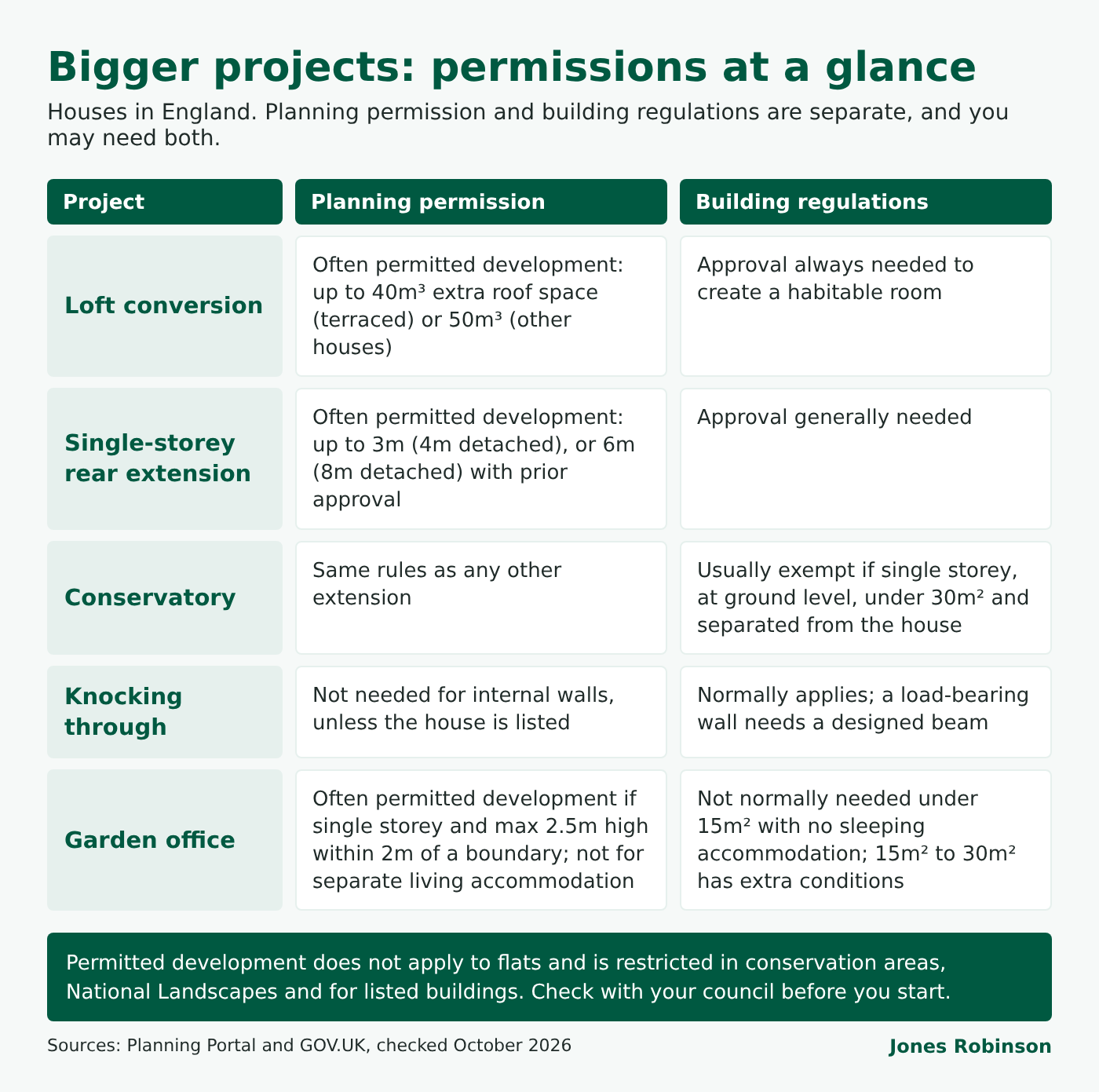
Permitted development rights can also be removed by a planning condition or an Article 4 direction. The North Wessex Downs National Landscape covers parts of Berkshire, Oxfordshire and Wiltshire, and many historic town centres and villages are conservation areas, so check with your council, such as West Berkshire, Wiltshire or South Oxfordshire, before you design anything. Listed homes need listed building consent for any significant works, inside or out (see our guide to buying a Grade II listed property). The Planning Portal has the full rules for each project.
FAQs
What adds the most value to a house in the UK?
Extra usable space, particularly bedrooms and bathrooms. Nationwide’s 2025 research found a loft conversion or extension adding a double bedroom and bathroom could add up to 24% to a three-bedroom, one-bathroom house.
Does a new kitchen add value to a house?
It can help a house sell, but Nationwide could not identify a measurable price uplift from kitchen or bathroom renovations. A kitchen project is more likely to add value if it also adds floor space, for example through an extension.
Does a conservatory add value?
It adds space, and a conservatory you can use all year round counts for more with buyers than one that is too hot in summer and too cold in winter. Nationwide found that 10% more floor space adds around 5% to the price of a typical house, all else being equal, but a poorly insulated conservatory is unlikely to be valued like a proper room.
Will I get my money back on a home improvement?
Not always. Nationwide’s figures are increases in value, not profit, and the build cost can exceed the uplift, especially if your home is already near the top price for your street. Check recent sold prices nearby and ask a local agent what your home would be worth with and without the work before you commit.
Do I need planning permission for an extension or loft conversion?
Not always. Many extensions and loft conversions to houses in England are permitted development within set size limits, but flats, listed buildings and homes in conservation areas or National Landscapes usually need permission. Building regulations approval is needed either way for a loft conversion, and generally for an extension.
How we can help
Whether you are looking to sell now, or in the future, these are some great ideas on how you can increase the value of your home.
As leading, local estate agents in Newbury, Didcot, Lambourn and Hungerford, Marlborough, Pewsey, Devizes and the surrounding areas we are best placed to help you sell your property. We can even help you in finding your next home. If you are planning a bigger project, book a valuation and ask us what your home would be worth with and without the work.
By offering a personalised service we can tailor the sale and timeline to your requirements as we don’t believe the “one size fits all” approach works in this industry.
We are also very transparent with a clear sales process, so you know what to expect. This is especially useful if this is your first time selling a house.
Contact your local branch to find out how we can help you sell your home and how you can get the best value from your property sale.