

In this blog
- What does under offer mean?
- What is the difference between under offer and Sold STC?
- Is an under offer sale legally binding?
- Can you still view or offer on a property that is under offer?
- What happens after a property goes under offer?
- How long does a property stay under offer?
- How can you protect an accepted offer?
- FAQs
Under offer usually means a buyer has made an offer on a property and the seller has accepted it, but contracts have not yet been exchanged. Some agents also use it while the seller is still deciding whether to accept. Either way, the sale is not legally binding in England and Wales until exchange of contracts.
Because there is no legal definition, the label can mean slightly different things from one agent to the next, which is why buyers often find it confusing. This guide explains what under offer means in practice, how it differs from Sold STC, whether you can still make an offer, and what happens between an accepted offer and getting the keys.
What Does Under Offer Mean?
Under offer means an offer has been made on the property and, in most cases, accepted by the seller, subject to contract. "Subject to contract" means the agreement depends on the legal work being completed and contracts being signed and exchanged, so either side can still withdraw until then.
You will see under offer on estate agents' websites, on for sale boards and on property portals. Rightmove lets buyers choose whether to include under offer and Sold STC properties in their search results, so these homes often remain visible after an offer has been accepted.
Zoopla describes under offer as meaning a buyer has made an offer and the seller has either accepted it or, in some cases, is still deciding (Zoopla). If you are interested in a home marked under offer, the simplest step is to ask the agent which applies.
What Is the Difference Between Under Offer and Sold STC?
In practice, under offer and Sold STC (sold subject to contract) often mean the same thing: an offer has been accepted but contracts have not been exchanged. The difference is mainly how each agent uses the labels. Some use under offer while an offer is being considered or before the buyer's position is verified, then switch to Sold STC once the sale is agreed and solicitors are instructed.
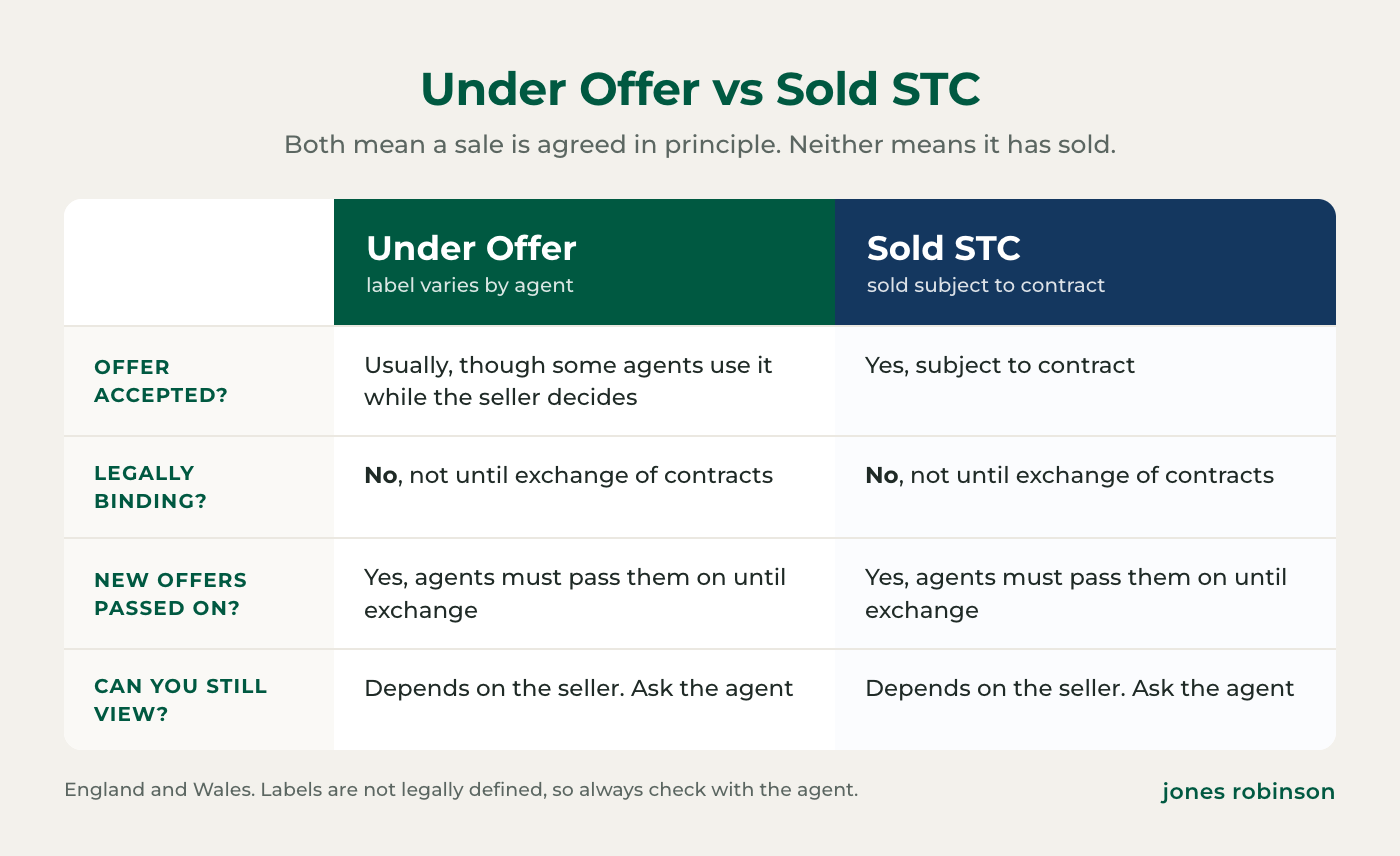
Neither label means the property has sold. Our guide to what Sold STC means covers that stage in more detail.
Is an Under Offer Sale Legally Binding?
No. In England and Wales, a contract to sell land must be made in writing and signed by both parties, which in a house sale happens at exchange of contracts. Until then, the buyer can withdraw or renegotiate and the seller can accept a different offer, without either side breaking the law.
That is why gazumping, when a seller accepts a higher offer after agreeing a sale, is legal in England and Wales. It is also why buyers should wait until exchange before committing to anything they cannot undo, such as handing in notice on a rental. Once contracts are exchanged, both sides are legally bound; our guide to exchange of contracts explains what that involves.
Can You Still View or Offer on a Property That Is Under Offer?
Yes, you can usually make an offer on a property that is under offer, and the agent must pass it on to the seller. Whether you can view depends on the seller's instructions, as some sellers stop viewings once they accept an offer and others keep marketing the property.
Estate agents have a legal duty to forward offers to the seller promptly and in writing, under the Estate Agents (Undesirable Practices) (No. 2) Order 1991, unless the seller has asked in writing not to receive offers of that kind (legislation.gov.uk). The Property Ombudsman Code of Practice, which Jones Robinson follows, also requires agents to tell sellers about all offers up until exchange and to confirm each one in writing (The Property Ombudsman).
If you are thinking of offering on a home that is under offer, be realistic. Many sellers stick with the buyer they have agreed with, particularly if that buyer is proceeding well. A strong position helps: a mortgage agreed in principle, nothing to sell or a buyer already found for your own home, and a solicitor ready to go. Our guide on how to make an offer on a house covers how to present yours.
What Happens After a Property Goes Under Offer?
Once an offer is accepted, the agent sends a memorandum of sale to both parties' solicitors or conveyancers. This document confirms the agreed price, the buyer and seller, and their legal representatives, but it is not legally binding. The conveyancing then begins.
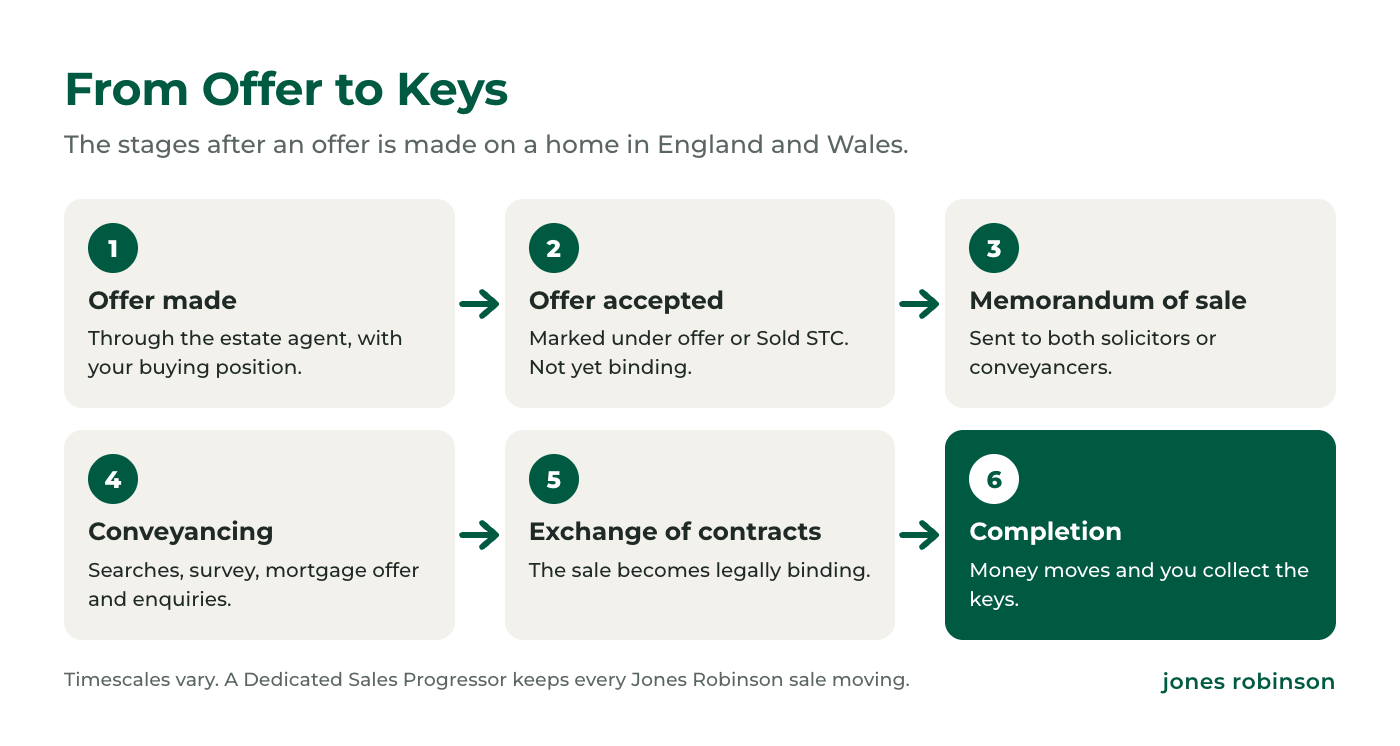
During this stage the buyer arranges their mortgage and survey, and their conveyancer carries out property searches and raises enquiries about the property. The seller completes property information forms. When everyone is ready, contracts are exchanged and a completion date is fixed.
At Jones Robinson, every sale has a Dedicated Sales Progressor who keeps in touch with buyers, sellers, solicitors and the rest of the chain, so problems are picked up early rather than at the last minute.
How Long Does a Property Stay Under Offer?
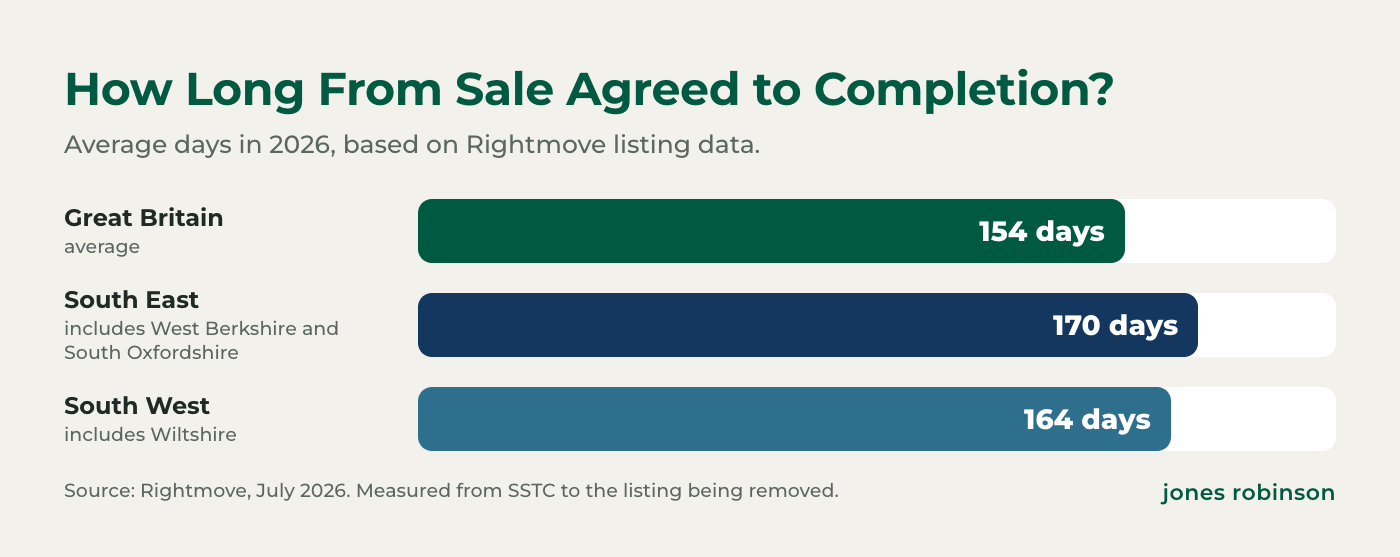
A property usually stays under offer or Sold STC until the sale completes. Rightmove data published in July 2026 found it takes 154 days on average across Great Britain from a sale being agreed to completion, rising to 170 days in the South East and 164 days in the South West (Rightmove, July 2026).
Not every agreed sale makes it. The same Rightmove analysis found that 23% of transactions initially fall through, although many of those homes go on to find a new buyer. Chains, mortgage delays, survey findings and slow legal work are the usual causes.
How Can You Protect an Accepted Offer?
There is no way to make an accepted offer binding before exchange, but you can reduce the risk of losing it. Buyers who move quickly and stay in touch give sellers little reason to look elsewhere.
- Instruct your conveyancer as soon as your offer is accepted, and return their paperwork promptly.
- Apply for your mortgage straight away and book your survey early.
- Ask the seller, through the agent, whether they will stop viewings and take the property off the market.
- Keep in regular contact with the agent so any issues are dealt with quickly.
Some buyers and sellers use a lock-out or reservation agreement, where the seller agrees not to deal with anyone else for a set period. These need legal advice, and our guide to gazumping and gazundering explains how they work.
FAQs
Does under offer mean the offer has been accepted?
Usually, yes, but not always. Some agents use under offer while the seller is still considering an offer. Ask the agent to confirm.
Is it worth viewing a property that is under offer?
It can be, particularly if it is exactly what you are looking for. Around a quarter of agreed sales initially fall through, so registering your interest means the agent can contact you if the sale collapses.
Can a seller accept another offer after accepting mine?
Yes. Until contracts are exchanged, a seller in England and Wales can accept a different offer. The agent must pass any new offers on to the seller.
Why is a house that is under offer still on Rightmove?
Agents often leave under offer and Sold STC properties listed so buyers can see what is selling, and portals let you choose whether to include them in your search. The listing should show clearly that an offer has been accepted.
How long from under offer to completion?
Rightmove puts the average at 154 days from sale agreed to completion across Great Britain in 2026, although simple chain-free sales can move faster.
Looking for Your Next Home?
Our teams in Newbury, Didcot, Marlborough, Devizes, Pewsey and Lambourn can tell you where any property stands and let you know if a sale falls through. Browse properties for sale, or find out more about buying with Jones Robinson.
Selling first? Book a Valuation so you can offer from a stronger position.