

As winter approaches, it’s essential to ensure your home is ready for the colder months ahead. Proper preparation can help keep your living space warm, safe, and comfortable while avoiding common winter-related issues.
Anna Hill, our Head of Property Management and Lettings Operations, offers a helpful winter checklist that outlines essential precautions to prevent frost damage, burst pipes, and leaks during this season. Here are some key tips to help you get your home winter ready.

Updated October 2026: we have added current Energy Saving Trust savings estimates, corrected our thermostat advice and added the alarm rules for rented homes. For frozen pipes, stopcocks, outside taps, oil tanks and gutters, see our winter maintenance checklist, and for quick, no-cost ways to feel warmer, such as bleeding radiators and moving furniture away from them, read our tips on keeping your home warm this winter.
In this blog
- Check your heating and hot water
- Seal any draughts
- Use your thermostat effectively
- Ventilate to prevent condensation
- Ensure adequate lighting
- Test smoke and carbon monoxide alarms
- Monitor your energy use
- How much could these steps save?
- Frequently asked questions
1. Check Your Heating and Hot Water
Before the chill sets in, make sure your heating system is functioning efficiently. Test your radiators, boilers, and thermostats to confirm they’re working properly. If you notice any issues, such as radiators not warming up fully or inconsistent hot water supply, take note to address them early to prevent more significant problems down the line.
Autumn is a sensible time to book a boiler service (with a Gas Safe registered engineer for a gas boiler), so any faults are found before you rely on the heating every day. If your home is off the mains gas grid and heated by oil, as some village homes in our area are, check the tank level before the weather turns.
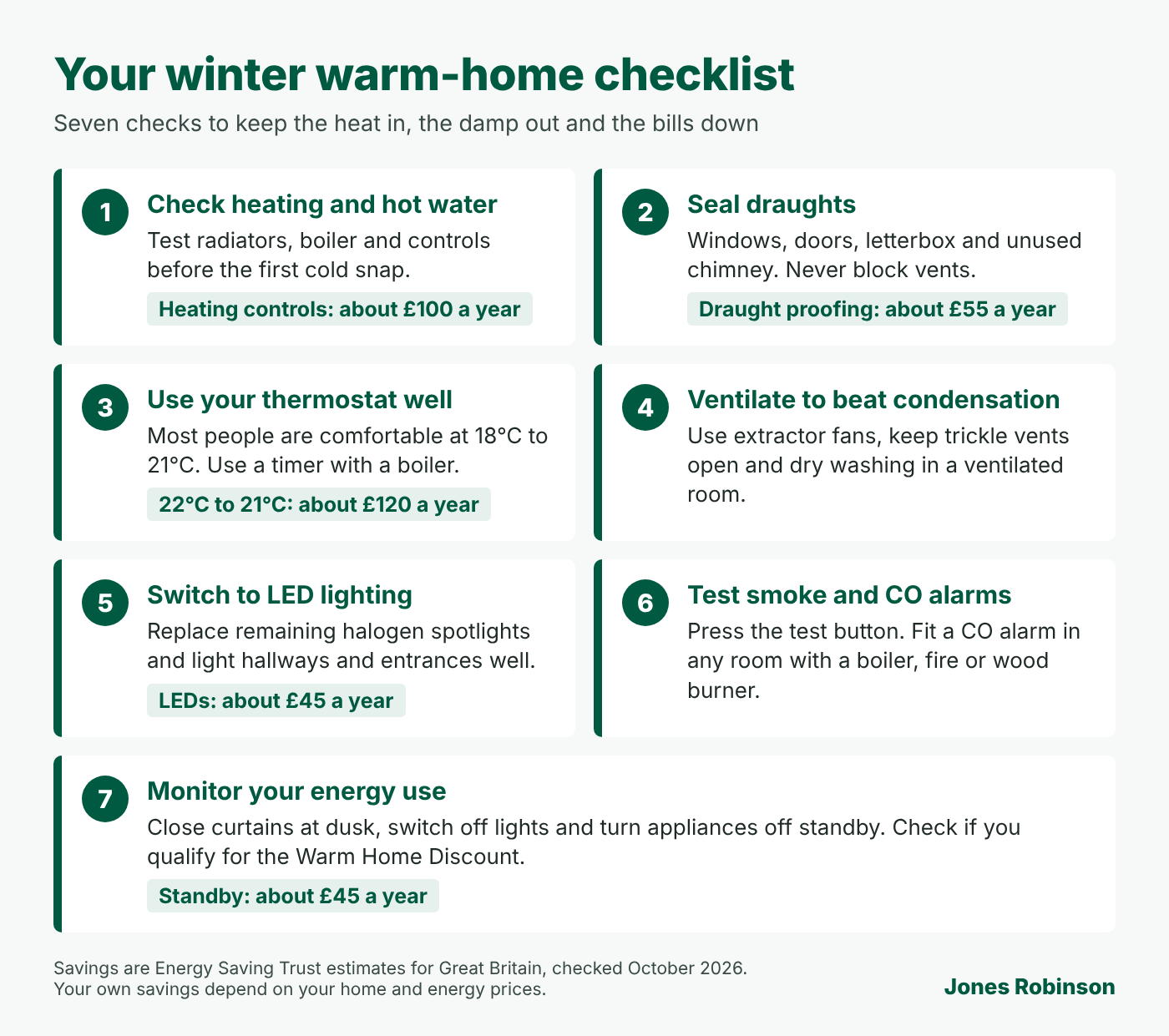
Check your controls too: the Energy Saving Trust says a boiler system should have at least a programmer, a room thermostat and thermostatic radiator valves (TRVs), and estimates that installing heating controls could save around £100 a year in Great Britain. Tenants should report heating faults straight away; Jones Robinson tenants can report a maintenance repair online.
2. Seal Any Draughts
Keeping the warmth inside is crucial during winter. Check for draughts around windows, doors, and skirting boards, and seal any gaps you find. Using draught excluders or temporary weatherproofing tape can significantly reduce heat loss and make your home more energy-efficient, ultimately helping to lower your heating costs.
The Energy Saving Trust estimates that draught proofing around windows, floors and doors could save around £55 a year in Great Britain, and that draught proofing an unused chimney could save around £45 a year. Do remove a chimney draught excluder before you light a fire. Other easy places to check are letterboxes, keyholes and loft hatches.
Draught proofing is about stopping unwanted gaps, not sealing your home completely: leave trickle vents open, keep extractor fans working and never block airbricks or underfloor grilles.
3. Use Your Thermostat Effectively
Make the most of your thermostat to maintain a comfortable temperature in your home. Set it to the lowest temperature you find comfortable, which the Energy Saving Trust says is between 18°C and 21°C for most people. Turning it down from 22°C to 21°C could save around £120 a year in Great Britain, according to its estimates.
Use the timer to heat your home only when you need it. If you have a boiler, the Energy Saving Trust says keeping the heating on all the time uses more energy and costs more, so set the programmer to bring the heating on about half an hour before you get up and switch it off about half an hour before bed. Heat pumps are the exception: with a heat pump, the Energy Saving Trust says you can save money by leaving the heating on all day.
If you’re going to be away for a while during cold weather, don’t switch the heating off completely. Leave it on a low or frost-protection setting to help prevent pipes from freezing, and make sure you know where your stopcock is in case of a leak.

4. Ventilate to Prevent Condensation
In winter, windows stay shut and walls and glass are colder, so the moisture from cooking, showering and drying clothes is more likely to settle as condensation and lead to damp and mould. To mitigate this, ventilate your home regularly by opening windows briefly, especially in kitchens and bathrooms where moisture tends to accumulate. Use extractor fans where available, keep trickle vents open, and avoid drying clothes indoors without proper ventilation to reduce moisture buildup.
For more detail, see our guides to the ideal humidity in a house and combatting condensation and damp.
5. Ensure Adequate Lighting
With shorter days and longer nights, good lighting becomes essential. Check that your home is well-lit, particularly in entrances, hallways and on outside steps and paths, to enhance safety and comfort. Consider using energy-efficient LED bulbs to reduce energy costs while ensuring your space remains bright and welcoming.
The Energy Saving Trust estimates that replacing the remaining halogen spotlights in a home with LED bulbs could save around £45 a year in Great Britain, and that simply switching lights off when you leave a room saves around £7 a year. For outside lights, an integrated LED unit with a motion sensor means the light only comes on when it is needed.
6. Test Smoke and Carbon Monoxide Alarms
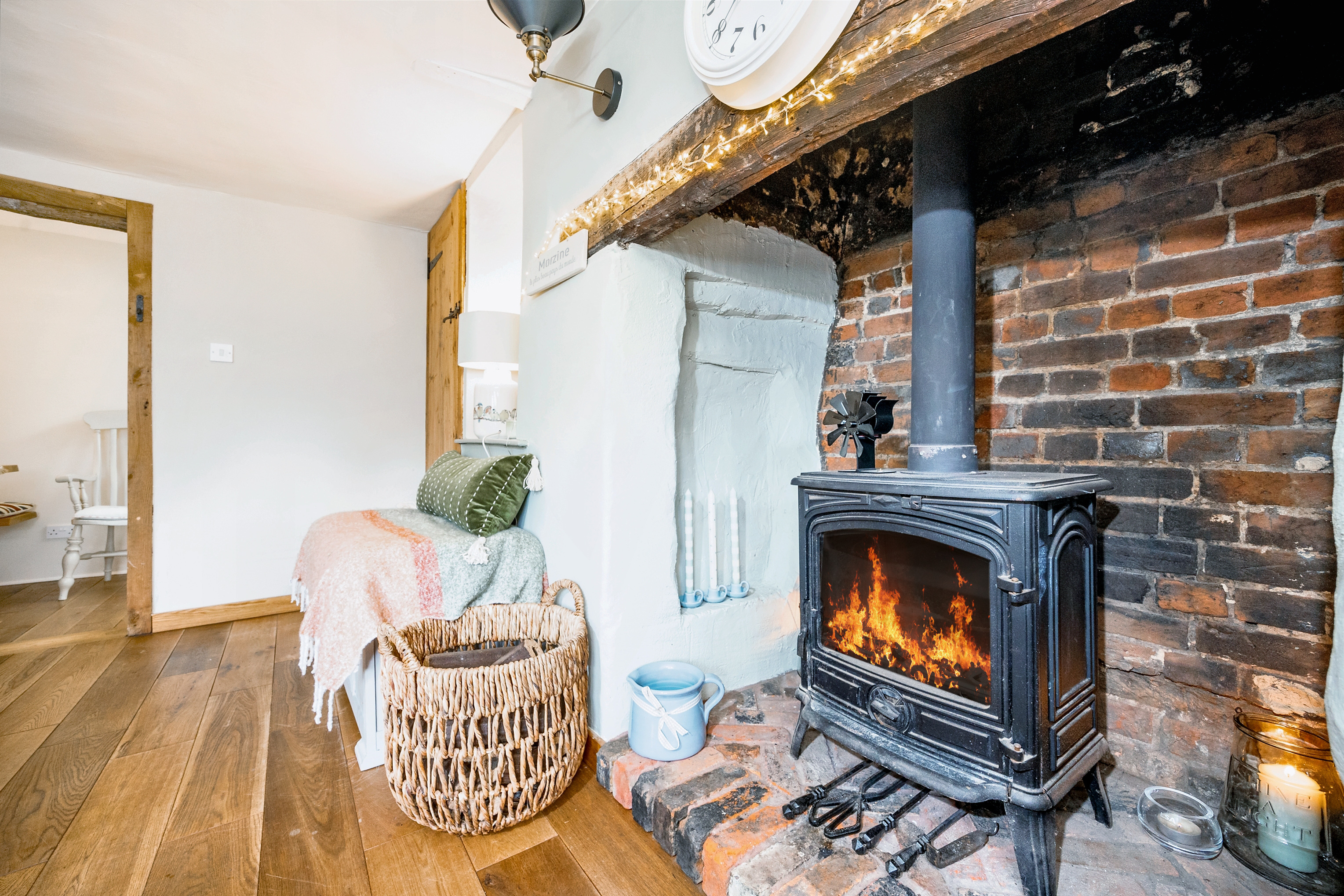
The winter season often means increased use of heating systems, making it crucial to ensure your smoke and carbon monoxide alarms are functioning properly. Test these alarms regularly, following the manufacturer’s instructions, and replace batteries if needed. These safety devices are vital for protecting you and your loved ones from potential hazards. If you are lighting an open fire or wood burner for the first time this season, make sure the chimney has been swept and that there is a carbon monoxide alarm in the room.
If you rent out a home in England, these checks are a legal requirement. Since 1 October 2022, under the Smoke and Carbon Monoxide Alarm (Amendment) Regulations 2022, relevant landlords must:
| Requirement | What it means in practice |
|---|---|
| Smoke alarms | At least one on each storey with a room used as living accommodation |
| Carbon monoxide alarms | In any room used as living accommodation with a fixed combustion appliance, such as a boiler, open fire or wood burner (gas cookers are excluded) |
| Start of a new tenancy | Check each required alarm is in proper working order on the day the tenancy begins |
| During the tenancy | Repair or replace alarms once told they are faulty |
| Enforcement | Local councils can impose a fine of up to £5,000 if a landlord fails to comply with a remedial notice |
Source: GOV.UK, Smoke and Carbon Monoxide Alarm (Amendment) Regulations 2022: guidance for landlords and tenants (checked October 2026).
Tenants are advised to test their alarms during the tenancy, replace the batteries if an alarm stops working, and tell the landlord if it still does not work. If you would rather leave compliance checks like these to a professional, find out how our landlord services team can help.
7. Monitor Your Energy Use
With energy bills still a big part of household budgets, being mindful of your consumption is as important as ever. Simple actions, such as closing curtains at night to retain heat, turning off lights in unoccupied rooms, and switching off electronics that aren’t in use, can contribute to lower energy bills. The Energy Saving Trust estimates that remembering to turn appliances off standby could save around £45 a year in Great Britain.
Bear in mind that Ofgem’s energy price cap limits the unit rate and standing charge your supplier can charge, not your total bill, so the more energy you use, the more you pay.
There is also help available:
- Warm Home Discount: a one-off £150 off your electricity bill. For winter 2026 to 2027 in England and Wales, you may qualify if, on 23 August 2026, you or your partner got Universal Credit, Housing Benefit, income-related ESA or Pension Credit and your name (or your partner’s) is on the electricity bill. It is usually applied automatically by your supplier. See GOV.UK: Warm Home Discount Scheme.
- Personalised recommendations: if you own a home in England or Wales, the government’s Find ways to save energy in your home service suggests improvements, with an estimated cost and saving for each.
- Bigger upgrades: the Boiler Upgrade Scheme currently offers £7,500 towards an air source or ground source heat pump in England and Wales (see our heat pump guide), and our article on grants to make your home more energy efficient covers other options.
How much could these steps save?
| Action | Estimated saving a year (Great Britain) |
|---|---|
| Turn the thermostat down from 22°C to 21°C | £120 |
| Install and use heating controls effectively | £100 |
| Draught proof windows, floors and doors | £55 |
| Draught proof an unused chimney | £45 |
| Replace remaining halogen spotlights with LEDs | £45 |
| Turn appliances off standby | £45 |
| Switch lights off when you leave a room | £7 |
Source: Energy Saving Trust, When should I put my heating on? (updated 28 September 2026), Heating controls (updated 28 September 2026), Draught proofing (updated 20 May 2026), Lighting (updated 6 October 2026) and Quick tips to save energy (updated 6 October 2026). These are estimates based on an average of recent Ofgem price cap periods, so your own savings will depend on your home, how you use it and future energy prices. The savings are not all additive.
Frequently asked questions
Is it cheaper to leave the heating on low all day?
Not if you have a boiler. The Energy Saving Trust says keeping the heating on all the time uses more energy and costs more, so use a timer to heat your home when you need it. Heat pumps are different: the Energy Saving Trust says you can save money by leaving a heat pump on all day.
Do landlords have to fit carbon monoxide alarms?
Yes, in England. Since 1 October 2022, landlords must fit a carbon monoxide alarm in any room used as living accommodation that has a fixed combustion appliance, such as a boiler or wood burner (gas cookers are excluded), plus a smoke alarm on every storey with a room used as living accommodation.
Can I get help with my energy bills this winter?
If you or your partner got Universal Credit, Housing Benefit, income-related ESA or Pension Credit on 23 August 2026, you may qualify for the £150 Warm Home Discount for winter 2026 to 2027, usually applied automatically by your electricity supplier. Homeowners can also use the government’s free online tool to find energy saving improvements for their home.
By following these winter preparation tips, you can enjoy a warm and comfortable home throughout the colder months. If you encounter any issues or need assistance, keeping these measures in mind will help ensure your living space remains cosy and safe all winter long.
Stay warm and have a wonderful winter season!
Talk to your local Jones Robinson branch
Whether you are a landlord preparing a rental property for winter or a homeowner thinking about a move in the new year, our local teams are here to help. Find out more about our property management service, book a property valuation, or contact your nearest branch:
Devizes: 01380 730200
Didcot: 01235 816222
Lambourn & Hungerford: 01488 73337
Marlborough: 01672 556640
Newbury: 01635 35010
Pewsey: 01672 556640